
Told it's just arthritis, degenerative changes, wear and tear — and that there's nothing more that can be done? That's not a treatment plan. That's a discharge. We use a unique german equipment to help regenerate degenerated tissue, not just mask the pain it causes.
Book Your Evaluation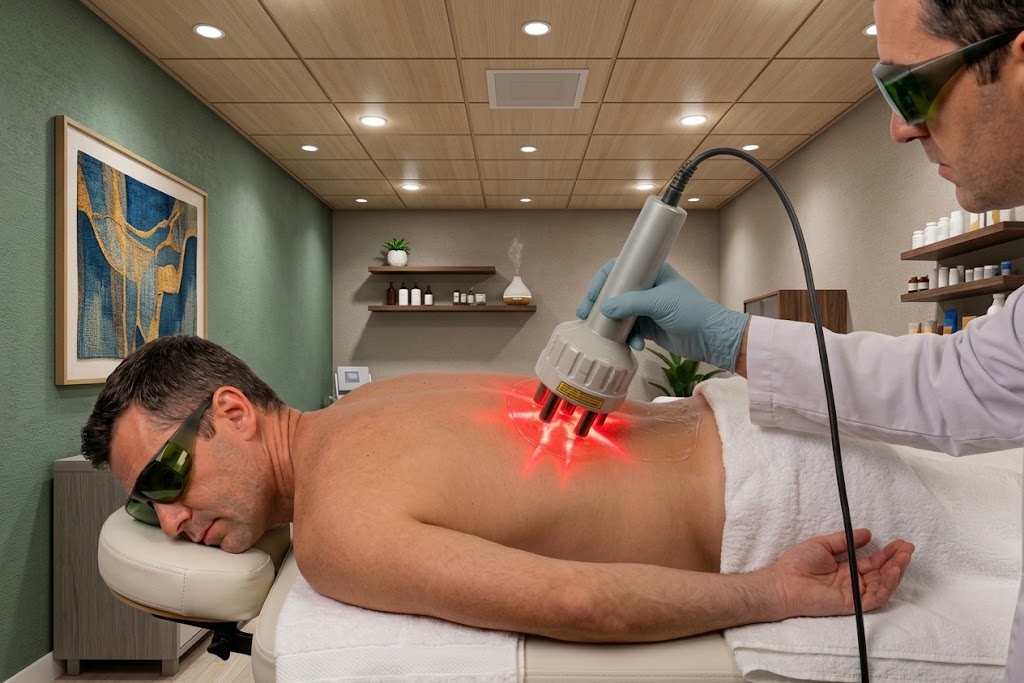
You went in with real pain in your back or neck. You got an X-ray or an MRI. And then you got the word almost everyone in this position eventually hears: arthritis. Degenerative changes. Wear and tear. "It's just part of getting older."
And then, often in the same breath, the part that actually sends people out the door with no plan at all: "There's nothing more we can do. Manage it with ice, ibuprofen, and lower your expectations."
That's not treatment. That's a discharge. And it leaves people in real, daily pain with the impression that nothing can actually change their situation — which isn't true.
If you're in Meridian, Boise, Eagle, or Nampa and you've been sent home with a diagnosis but no plan, Degenerative Spinal Arthritis Relief starts with a different premise: degenerative doesn't mean untreatable, and arthritis doesn't mean the conversation is over.
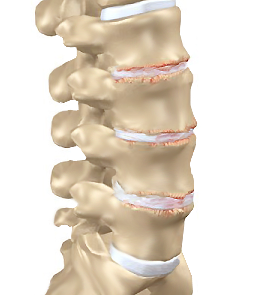
Degenerative spinal arthritis — sometimes called degenerative disc disease, spondylosis, or facet joint arthritis, depending on exactly where it shows up — describes the slow, cumulative wear of the joints, discs, and cartilage in your spine. It can happen in the neck (cervical spine) or the low back (lumbar spine), and the mechanics are similar in both places.
Over years, the discs between your vertebrae lose height and hydration. The facet joints — the small joints at the back of each vertebra that let your spine bend and twist — lose cartilage and start rubbing bone on bone.
Your body responds to that instability by laying down extra bone, called a bone spur or osteophyte, to try to stabilize the area. Sometimes that extra bone, or the collapsing disc space itself, starts crowding the space where a nerve root exits the spine —
and that's when "arthritis" stops being a stiff, achy nuisance and starts being the sharp, radiating, sometimes debilitating pain that sends people to urgent care.
This is a real, structural, visible-on-imaging process. We're not going to tell you it isn't. What we are going to tell you is that "visible on imaging" and "nothing can be done" are two very different statements, and only one of them is actually true.
Most conventional treatment for spinal arthritis focuses entirely on managing symptoms: anti-inflammatories, occasional steroid injections, and eventually a conversation about surgery. What's almost never offered is anything aimed at the tissue itself. That's the gap our approach is built to address.
We use a unique German-engineered super-pulsed laser system, and for degenerative spinal arthritis specifically, we use its cluster probe — a specialized applicator that delivers concentrated photobiomodulation therapy across a broader area of degenerated tissue at once, rather than treating a single small point.
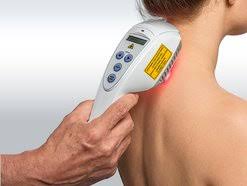
Photobiomodulation uses specific wavelengths of light to stimulate mitochondrial activity inside your own cells, increasing the energy available for repair and reducing local inflammation. Applied consistently over a degenerated disc, facet joint, or the surrounding soft tissue, that stimulation can support real tissue regeneration — not a guess, not a marketing phrase, but a documented biological mechanism this laser technology is built to activate.
In several cases, patients with arthritis-driven back pain have seen that pain completely resolve. In other cases, the improvement has been substantial rather than complete: the pain doesn't disappear entirely, but it drops enough that daily life stops revolving around it.
We won't promise 100% regeneration of tissue that's taken years to degenerate — every case responds differently. But even partial regeneration matters enormously here, because it's often enough to stop the disc space from continuing to collapse and press further into the nerve, which is what was driving the pain in the first place.
A Case That Stays With Me
I had a patient come into my waiting room a while back — a woman, 56 years old, who had immigrated from Iraq and had lived through a genuinely difficult life. When I saw her, she was lying in the fetal position on one of the couches in my office. She had a cane with her, but she could barely walk at all.
She'd already been to ER, twice and couldn't get into see a surgeon for 2 months. She was literally and genuinely crying out in pain.
She showed me her MRI. It showed significant degenerative arthritis in her lumbar spine, with disc herniations on top of it. Honestly, an MRI like that carries an ominous prognosis. When I asked her to rate her pain on a scale of one to ten, she told me it wasn't a ten — it was more like ten thousand.
We started treating her twice a week for one month, combining this same super-pulsed laser and cluster probe with traditional acupuncture and a few other tricks I'vde learned — the laser working directly on the degenerated tissue itself, the acupuncture calming the inflammation and pain-signal processing around it.
Neither one alone would have gotten her where she needed to go; together, they did
At the end of that month and 2 x weekly sessions, her pain had come down from that ten-plus down to a four. She still needs more treatment, and there's still more improvement to be made.
But that's the kind of change I've seen this combination make possible — even starting from a place that looked as bad as hers did.
We start by identifying exactly where your arthritis is doing the most damage — which levels of the spine, and whether the primary issue looks like disc-space narrowing, facet joint degeneration, or nerve-root crowding from a bone spur.
We use a paraspinal temperature-scanning device to check for active inflammation along the spine, confirming which level is actively irritated right now versus which levels show change on imaging but aren't currently a major pain generator.
From there, the super-pulsed laser with the cluster probe becomes the centerpiece of treatment, applied directly over the affected segment or segments. We typically pair this with acupuncture to manage the inflammatory component and calm pain-signal processing, and with Adhesion Release Method where we find soft-tissue restriction compounding the joint-level problem — common, since a spine that's been guarding around arthritic pain for years often develops significant restriction on top of the arthritis itself.

We're not going to tell you every case of degenerative spinal arthritis fully resolves, because that isn't true. Severe, long-standing degeneration has a real biological ceiling on how much can be regenerated, and some patients will see meaningful, life-changing improvement without ever seeing their imaging look "normal" again.
What we can tell you, honestly: many patients get real relief, and it's not always partial. We've had patients whose back pain from spinal arthritis has gone away completely. We've had others where the improvement was substantial rather than total — pain reduced enough that it stopped controlling their day, mobility improved, and a slowly worsening problem was replaced by a stable or improving one.
We'll tell you early, based on your specific imaging and pattern, which outcome looks realistic for you — not what sounds best walking in the door.
It's true mainstream medicine doesn't have many tools aimed at regenerating degenerated spinal tissue — most of what's offered is symptom management or eventually surgery. Our super-pulsed laser with the cluster probe is specifically built to stimulate tissue repair, which is a different approach entirely. Likely one your doctor doesn't know about.
Photobiomodulation's ability to stimulate cellular repair is well-documented, and we've seen real regeneration-driven outcomes in our own patients, including cases where back pain from arthritis resolved completely. We won't promise full reversal for every case, but meaningful improvement, including full resolution in some patients, is genuinely possible.
Both. Degenerative arthritis follows the same basic process whether it's in the cervical spine (neck) or lumbar spine (low back), and the cluster probe laser treatment with acupuncture applies to either location.
It depends on how many spinal levels are involved and how advanced the degeneration is. We'll give you a realistic plan after evaluating your imaging and your specific pattern of pain.
In addition to, not instead of. We're not replacing your physician's diagnosis or management — we're adding a treatment approach aimed directly at the degenerated tissue itself.
X-ray can be helpful if the changes have reached the bone level. MRI are super helpful to understand what's going on with soft tissues like discs or other changes. If you have them, bring them.