
Meridian, ID · Boise · Eagle · Nampa
Hip Pain Relief for the Pain That Gets Worse Every Time You Stand Up
You've heard “bone on bone.” You've heard “eventually you'll need surgery.” Real Hip Pain Relief starts with a better question: what, specifically, is causing your hip to hurt right now?
 Book Your Evaluation
That Moment You Brace Yourself Before You Move
You know the exact moment it hits. Getting out of the car after a short drive. Standing up from the couch after sitting too long. That first step out of bed in the morning, before your hip has “warmed up” enough to move right. It's a deep ache, sometimes sharp, sometimes just a stiff, grinding heaviness that makes you brace yourself before you move.
Does any of this sound familiar?
If you're in Meridian, Boise, Eagle, or Nampa and you're tired of being told to wait until it's “bad enough” for surgery, real Hip Pain Relief starts with a much more useful question: what, specifically, is causing your hip to hurt right now?
Is It Really Your Hip — Or Just Where You Feel It?
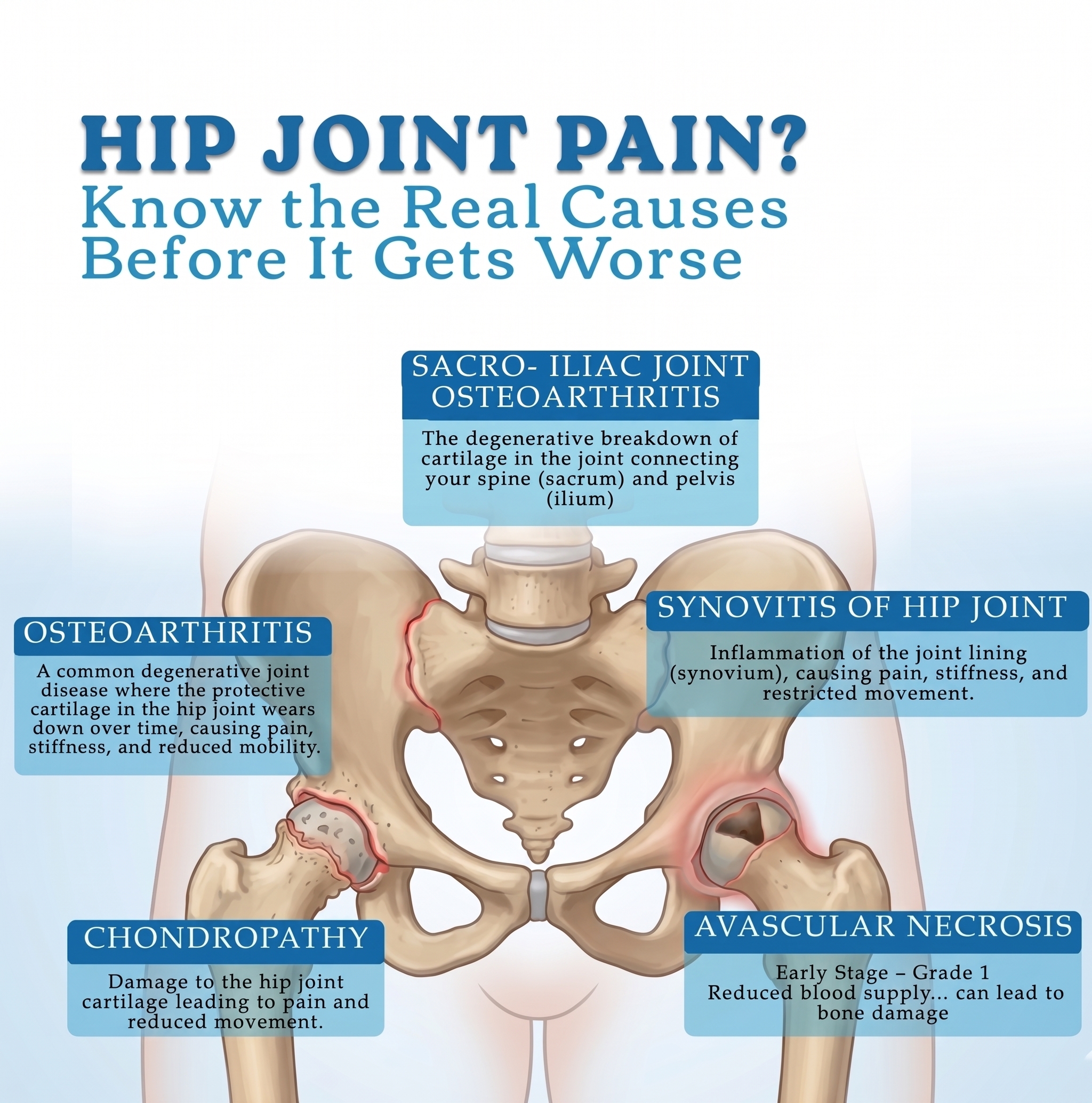
A significant number of “hip pain” cases aren't actually coming from the hip joint itself. They're coming from somewhere else and simply showing up as pain in the hip.
True Hip Joint Pain
From arthritis, labral wear, or joint degeneration. Pain deep in the groin, worse with rotation (like putting on socks or shoes), and stiffness most severe first thing in the morning.
Referred Pain
The low back, SI joint, and piriformis muscle can all refer pain directly into the hip, outer thigh, and buttock — feeling exactly like it's coming from inside the joint, even when the joint is in reasonably good shape.
This distinction matters enormously, because if your pain is actually coming from your lower back or SI joint, all the hip-focused treatment in the world — even hip replacement surgery — won't fully resolve it. You'd be operating on a joint that was never really the problem.
How We Actually Figure Out What's Going On
Before we treat anything, we map your pain. Where exactly is it? What makes it worse? Does it match true joint involvement, or does it look more like referred pain from the spine?
When your pattern suggests a possible spinal or SI joint referral component, we use a paraspinal temperature-scanning device to check for a temperature differential along the low back. A warm or hot reading often points to active inflammation or nerve irritation at that level of the spine.
We also assess how your hip actually moves — where the restriction is, and whether the surrounding soft tissue (the hip capsule, the IT band, the glute complex) has developed the kind of dense, restrictive adhesion that limits normal joint mechanics.
What We Actually Do About It
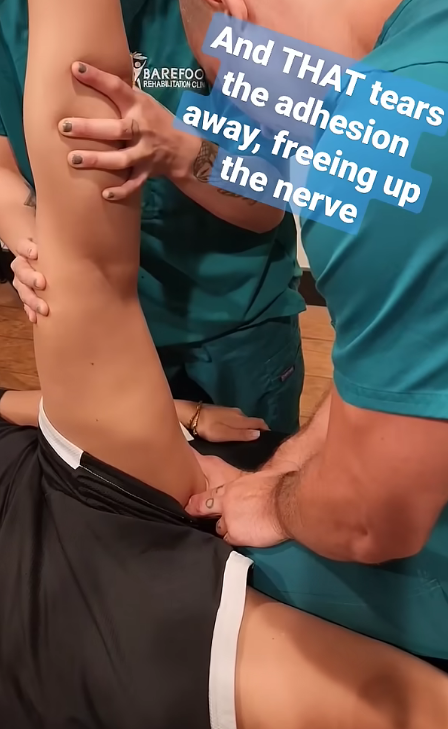
Adhesion Release Method (ARM)
Often the centerpiece of hip treatment, because so much of what makes hip pain worse over time is adhesion built up around the joint — in the hip capsule, IT band, and deep glute muscles — restricting movement and increasing load on the joint with every step.
Our Unique German-Engineered Laser
A needle-free way to work directly around the joint itself, supporting circulation and tissue health where needling isn't practical or a patient prefers a non-invasive option.
Acupuncture
Helps manage the inflammatory component of joint pain and supports pain-signal modulation — especially valuable when arthritis is a real, structural part of the picture.

For patients whose hip pain is actually driven by a spinal or SI joint referral pattern, we shift emphasis toward that source directly, because chasing the hip itself in that case would be treating the wrong location entirely.
Being Honest About “Bone on Bone”
We're not going to tell you that acupuncture and ARM regrow cartilage or reverse true bone-on-bone arthritis, because that isn't honest. If your joint has significant structural degeneration, there is a real physical limit to what any non-surgical treatment can do to the joint surface itself.
What we can tell you honestly: a large amount of the pain and disability that comes with hip arthritis isn't purely from the bone-on-bone contact — it's from the surrounding soft tissue guarding, restricting, and compensating around a joint that isn't moving well. That component often responds very well to treatment, even in patients with significant arthritis on imaging. We've worked with patients who were told surgery was their only option, who found enough real relief to comfortably delay that decision, sometimes for years. We'll tell you early which category your case looks like, based on your actual pattern, not on what sounds best in a sales pitch.
Frequently Asked Questions
I've been told I need a hip replacement. Is this instead of surgery?
Not necessarily, and we won't pretend it is if your case doesn't support that. We offer an honest evaluation of how much of your pain is treatable soft-tissue restriction versus structural joint degeneration, so you can make that surgical decision with better information — and, for many patients, meaningful relief in the meantime.
My X-ray shows bone-on-bone arthritis. Can this still help me?
Often, yes — not by reversing the joint changes, but by addressing the soft-tissue restriction and compensation patterns that make bone-on-bone arthritis feel significantly worse than the imaging alone would predict.
How do I know if my hip pain is really coming from my back?
The clearest signs are pain that's more in the buttock or outer thigh than the groin, pain that changes with different back positions, and a history of low back issues. We'll map your specific pattern at your first visit.
How many sessions will I need?
It depends on whether your case is primarily soft-tissue, primarily structural, or a referred pain pattern from the spine. We'll give you a realistic plan and timeline after your evaluation.
Is treatment painful?
manual work can involve pressure and a distinct sensation as we release restricted tissue, but it's a controlled, targeted technique. The laser is needle-free and generally painless.
Ready for Real Hip Pain Relief?
Serving patients across Meridian, Boise, Eagle, and Nampa. Find out exactly what's causing your hip pain before you decide what to do about it.
Schedule Your Evaluation