A disc bulge on an image doesn't automatically explain your pain — and it doesn't automatically mean surgery. We test first, then treat what's actually driving it.
Book Your Evaluation
It probably didn't happen all at once. Or maybe it did — one wrong bend picking up a laundry basket, and suddenly you were on the floor, unable to straighten up.
Either way, you know the pain now. It sits deep in your low back, and on the bad days it doesn't stay there — it runs down through your hip, your thigh, sometimes all the way to your foot. Sitting makes it worse. Bending makes it worse. Coughing or sneezing can make you see stars. You've started planning your whole day around which chairs you can tolerate.
Eventually you got the MRI. And there it was, in black and white: a herniated disc, or a bulging disc, sitting right at the level that matches your pain. Finally, an answer.
Except now you have a new problem. The answer came with a menu of options nobody fully explained: rest and see if it gets better on its own. Physical therapy. An epidural steroid injection. Or, if none of that works, surgery. And nobody told you the thing that would have changed how you felt about that MRI: a disc bulge showing up on an image doesn't automatically mean it's the reason you hurt.

Disc bulges and herniations are extremely common findings — including in plenty of people who have zero back pain at all. That's not a reason to dismiss your symptoms; your pain is real. It's a reason to be cautious about treating the image as the target instead of treating you. Two people can have nearly identical MRIs and have completely different pain experiences, because the real driver often isn't just the structural bulge — it's the inflammation and nerve irritation around it, and the muscle guarding your body builds up in response.
Here's something else worth knowing: many herniations shrink on their own over months, as the body gradually reabsorbs the displaced disc material. That doesn't mean "just wait it out and do nothing" — the inflammation, the nerve irritation, and the protective muscle bracing that built up around the injury don't necessarily resolve just because the disc itself is improving. That's usually the piece still causing pain long after the original injury has started to heal structurally.
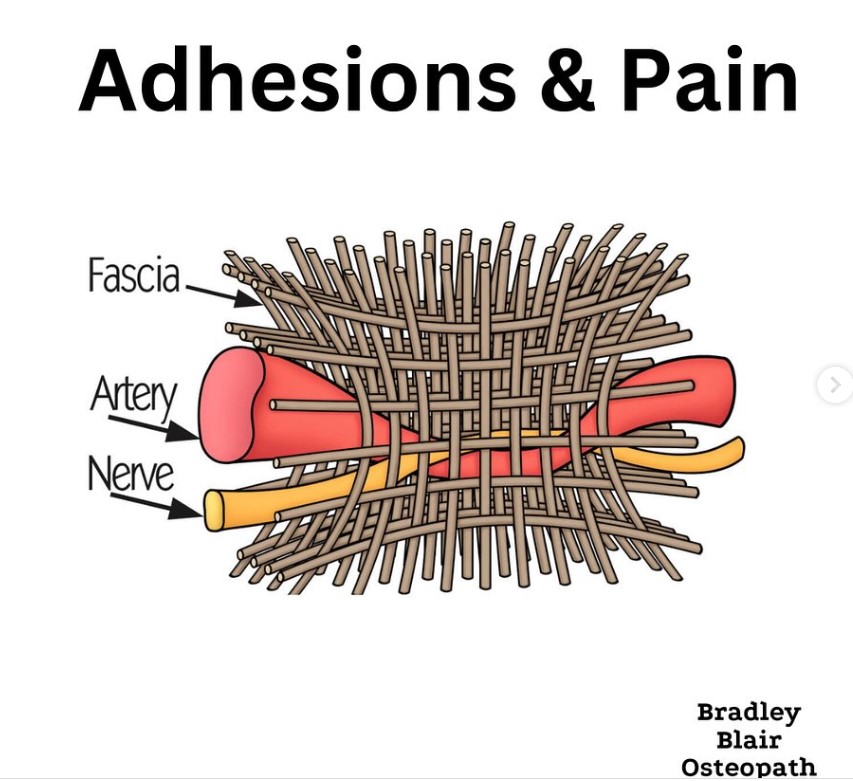
Most disc-related treatment plans are built around the image: an injection aimed at the level shown on the MRI, or a surgical recommendation if injections don't hold. Both can be genuinely necessary in the right circumstances. But neither one addresses something that develops in almost every case of a herniated disc: the muscles around the injured segment tighten up to protect it, and over weeks or months, that protective guarding can turn into dense, bound-down adhesions. Those adhesions restrict movement, compress the same nerve pathways, and keep the pain cycle running even as the disc itself heals.
If you've had an injection that helped for a few weeks and then wore off, or physical therapy that stretched the area without lasting change, that's often why: the plan addressed the disc or the muscle in isolation, not the compounding layers built on top of the original injury.
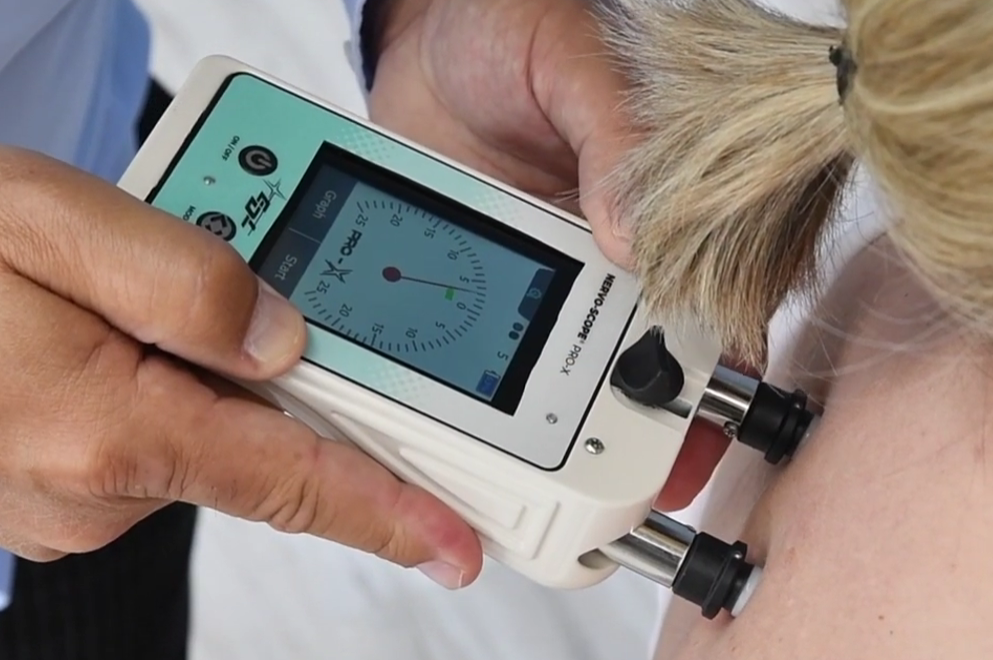
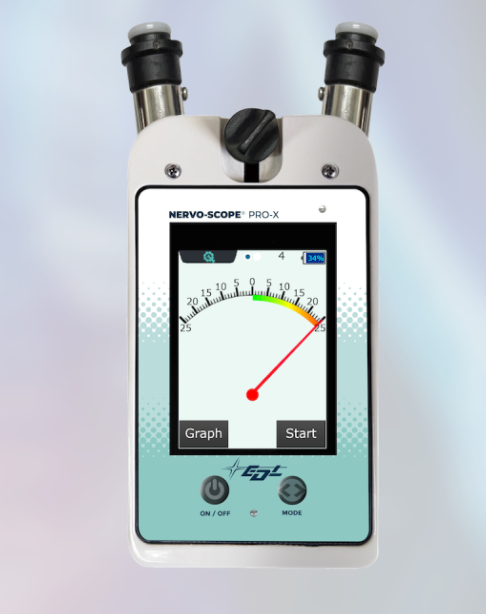
Your exam includes orthopedic testing to map exactly which movements and positions provoke your specific pain — which tells us a great deal about which level and structures are actually involved, not just what the MRI shows. We also run a paraspinal temperature scan as part of that exam.
Can point to active nerve root inflammation — a fresher, more acute irritation at that spinal level.
Often points to the chronic guarding and fibrosis pattern that builds up in the surrounding muscle over time.
Knowing which one — or both — you're dealing with changes how we sequence your care.
Treatment is matched to what your case actually needs, drawing on some combination of the following.
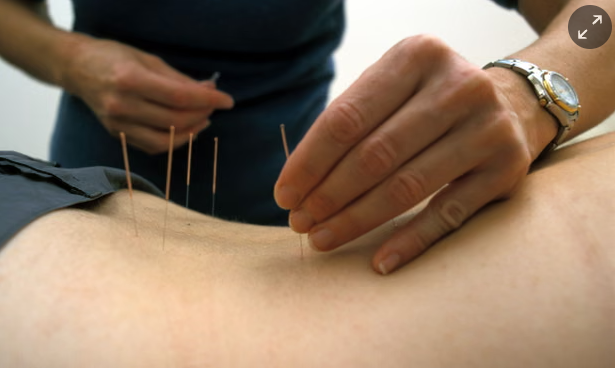
Fine needles help calm the inflammatory response around the affected nerve root and quiet the muscle spasm that develops as your body braces around the injury — often the difference between pain that flares with every wrong move and pain that finally has room to settle.
ARM addresses the guarding adhesions that build up in the paraspinal muscles and along the nerve's pathway in the weeks and months after a disc injury. This is frequently the piece standard care skips entirely — nobody manually releases the bound-down tissue that's kept the area locked up long after the initial injury.
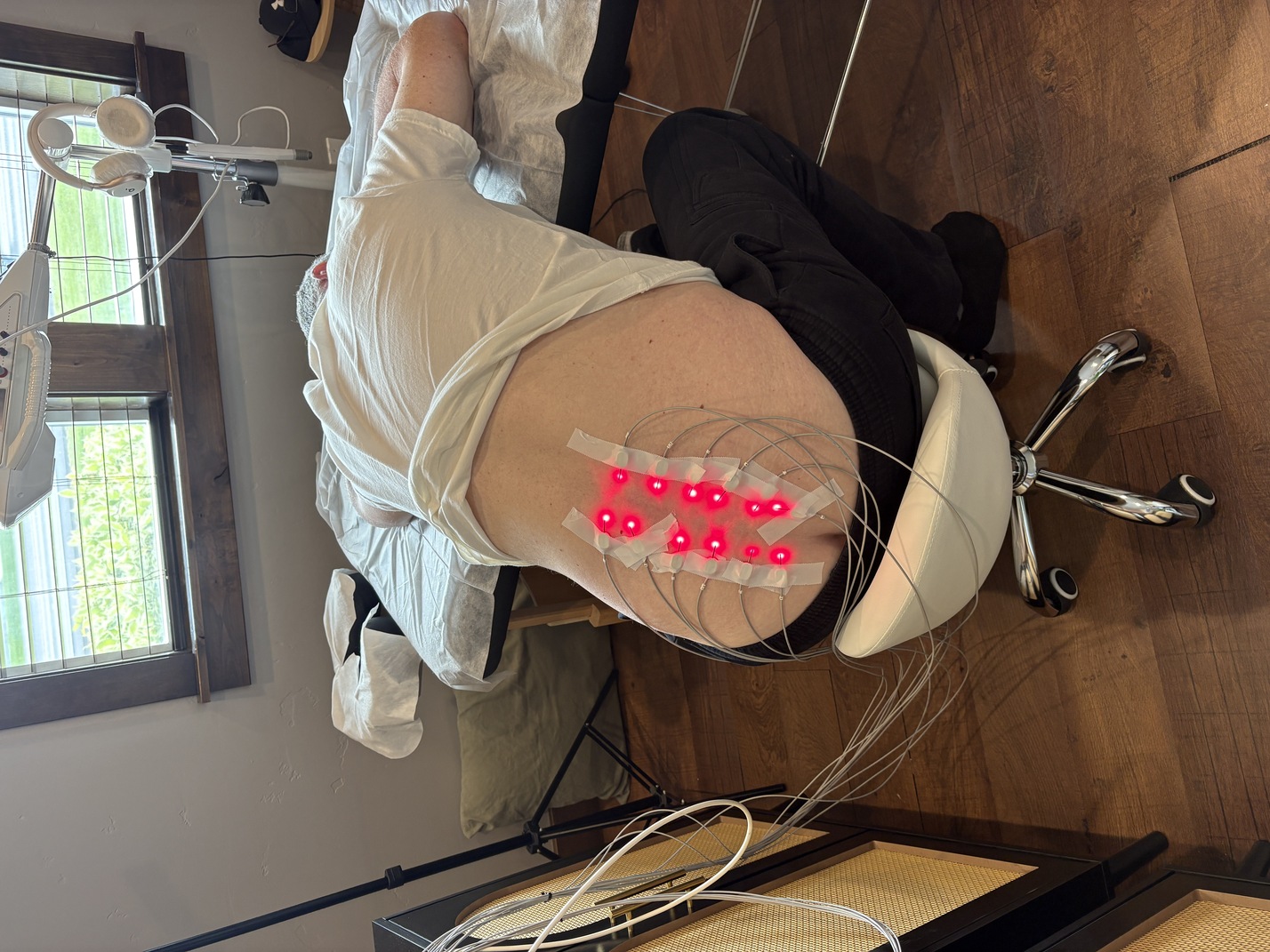
For inflammation and restricted tissue deep along the spine, particularly useful for anyone whose pain is aggravated by direct pressure, or who prefers a needle-free option.
This combination is often the missing piece for people who've "tried everything." Injections and surgery address the disc. Physical therapy stretches the muscle. Few approaches directly release the bound-down guarding tissue that keeps the pain cycle running.
We want to be direct about something: if you have progressive weakness, numbness in the groin or inner thighs, or any new loss of bladder or bowel control, that is a medical emergency — cauda equina syndrome — and you need to go to an emergency room immediately, not a clinic like ours. That's rare, but it's real, and no acupuncture or manual therapy is an appropriate substitute for emergency care in that situation.
For the large majority of disc-related back and leg pain that doesn't involve those red-flag symptoms, conservative care is the appropriate first step before surgery is considered — and it's where we focus.
We start by understanding exactly how this began, what makes it better or worse, and what you've already tried — including what your MRI showed and how you responded to any prior treatment.
How this began, what makes it better or worse, and what you've already tried — including how you responded to it.
Orthopedic assessment, our paraspinal scan, and hands-on evaluation to map precisely what's driving your specific pain today.
A plan combining acupuncture, ARM, and laser therapy as your case requires — not a generic disc protocol.
Most people with disc-related pain never need surgery. We'll be honest with you if something in your case looks like it needs a specialist's evaluation — our goal is an accurate answer, not talking you out of care you actually need.
Acupuncture needles are very thin and most people find sessions relaxing. ARM involves direct pressure through tight, restricted tissue — similar to deep tissue work. The laser is painless.
It depends on how long the pain has been building and how much guarding and adhesion has developed. We'll give you a realistic estimate after your evaluation.
No. You can schedule directly with us.
If you've had injections or physical therapy that helped briefly and then faded, there's a good chance the plan addressed only part of what's going on. We specifically look for — and treat — the adhesion and guarding pattern that builds around a disc injury. If your pain pattern looks more like sciatica or piriformis syndrome than a straightforward disc issue, we'll help sort out which one you're actually dealing with — the two are frequently confused with each other.
An MRI gave you a name for what's going on. It didn't give you a full explanation for why you still hurt, or a plan built around your actual body instead of just the image. That's what we do next.
Serving Meridian, Boise, Eagle, Nampa, Star, Kuna, and Caldwell.